

The better choice depends on more than purchase price. Compare the mechanism, usable drying length, wet-load handling, wall conditions, open projection and daily routine before choosing between a rope arrangement and a folding rack.
Key takeaways
- Identify the rope system before comparing it with a wall rack.
- Measure wall clearance, line height and folding space before drilling.
- Choose stainless steel or coated parts for humid utility areas.
- Match the system to your laundry routine and wet-load size.
Start by identifying which rope system you are comparing
A cloth drying rope can mean three different systems, and each compares differently with a wall folding rack.
| Option | What it means | Best fit |
|---|---|---|
| Fixed parallel lines | Ropes anchored between opposite walls | Long spans, low visual bulk |
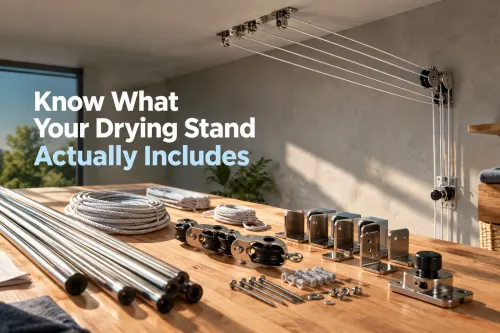
| Ceiling pulley system | Lines operated through pulleys and a cleat | High ceilings or easier lifting |
| Wall folding rope unit | A hinged wall frame carrying rope lines | Compact storage with rope flexibility |
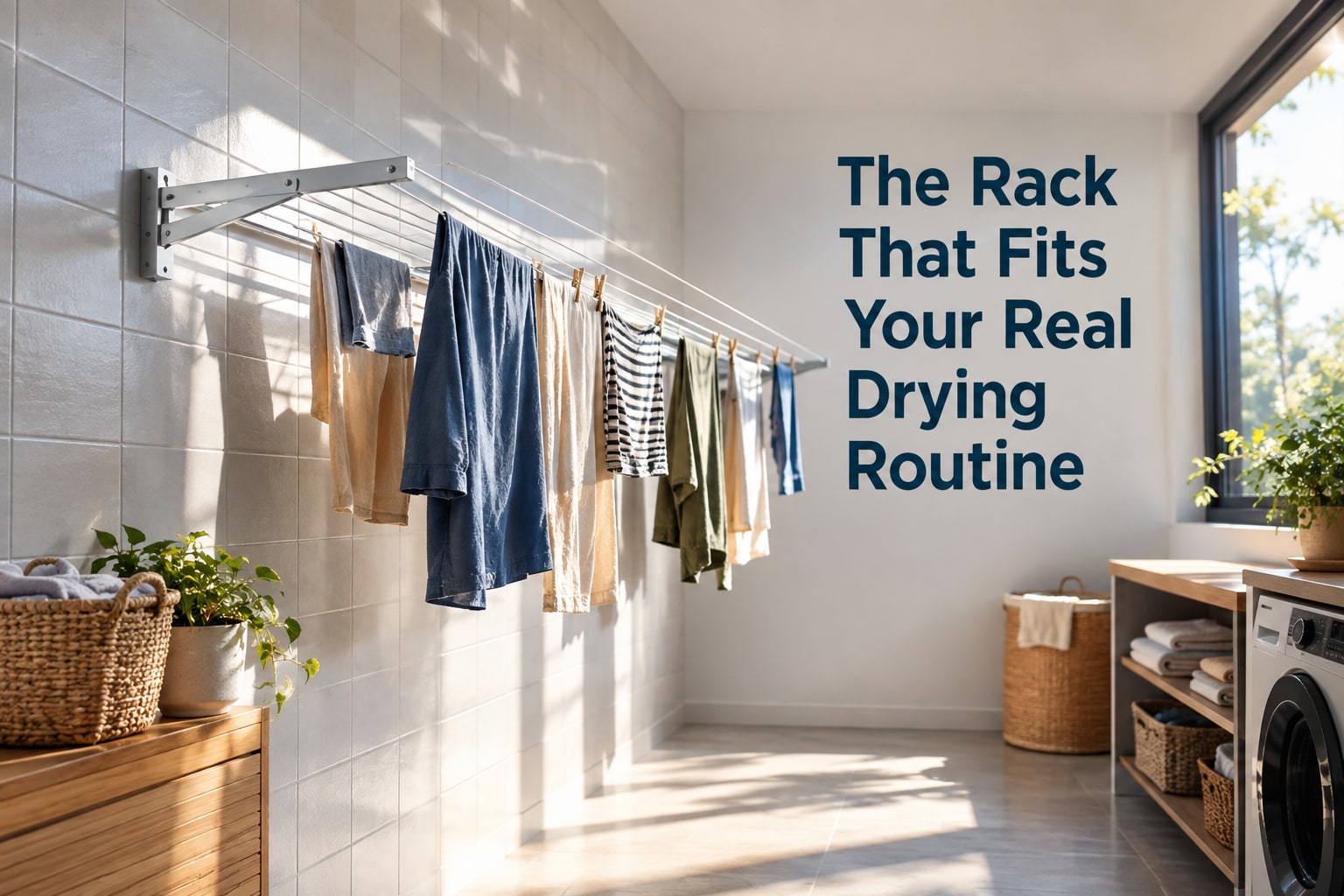
| Wall folding rack | Hinged solid rods with a defined open projection | Controlled spacing and tidy folding |
A fixed rope uses a long available span and leaves no floor footprint, but sag, anchor spacing and garment gaps determine its real capacity. A rack uses more hardware yet keeps rod positions repeatable and folds to a known profile.
Renters often favour a removable system or low-drilling arrangement, especially in a tiled bathroom or leased balcony. A permanent home can justify fixed anchors, tested fasteners and repeatable hardware that handles daily loading.
Also consider freestanding X stands when drilling is forbidden, retractable wall dryers when the wall must stay clear, and ceiling pulley hangers when floor space is limited but ceiling height is adequate. Check door swings, balcony shelter, monsoon splash and ventilation before choosing.
The phrase cloth drying rope versus wall folding rack in coimbatore should lead to a site comparison: choose rope for span and low bulk, or a rack for garment separation and controlled operation.
Compare usable capacity, airflow and wet-load behaviour
A rope’s usable capacity is clear span × number of parallel lines, minus end clearances and the gaps needed between garments. A three-line or four-line label proves nothing about capacity; a 3 m span with three lines gives 9 m before these deductions.
| Option | Compare | Wet-load behaviour |
|---|---|---|
| Cloth drying rope | Measure clear span, line count, end clearances and garment spacing | Efficient for long sheets and low bulk, but touching fabrics stay damp |
| Wall folding rack | Count rods, rod length, vertical spacing and maximum open projection | Holds towels, jeans and bedsheets apart more consistently |
Leave air gaps around wet cotton bedsheets, towels and jeans. Small garments tolerate closer spacing, but thick fabric traps moisture wherever surfaces overlap. A longer rope is not automatically more useful if clothes touch one another.
Uneven loading can twist a folding frame, increase hinge and anchor forces, or pull one side out of alignment. Rope tension reduces sag but increases horizontal force at both anchors, so the rope, tensioner and fixing system need one tested rating rather than separate guesses.
Sun exposure and cross-ventilation improve drying; high humidity, garment overlap and poor room ventilation slow it. A rope suits a long, breezy span, while a rack offers predictable separation and controlled vertical spacing. This cloth drying rope comparison should use usable drying length and actual wet-load behaviour, not product labels or total rope length.
Measure the operating envelope before drilling
A rack fits safely only when its operating envelope is clear, not merely its wall width. Measure in this order: clear wall width, usable span between obstacles, open projection, folded clearance, garment distance from the wall, and the swing paths of doors and windows.
Check the open frame against balcony parapets, wardrobes, air-conditioner airflow, pedestrian routes and wheelchair clearance. A rack that blocks a doorway or sits in the path of a window is the wrong choice, even if it fits when folded.
Wall type determines the fixing system. Concrete and solid brick accept different anchors from hollow brick, AAC block or plasterboard. On a tiled-over wall, drill through the tile and plaster into the structural wall; tile, plaster and decorative panels are finishes, not anchor substrates.
Ask which screw and anchor transfer load into that wall, then request the tested load rating for that exact substrate and fixing method. Do not accept a concrete rating for an AAC or hollow-brick installation.
Compare the practical envelope before choosing among wall mount drying options:
| Option | Check before installation | Reject when |
|---|---|---|
| Wall folding rack | Projection, folded clearance, hinge access and support lock | It obstructs circulation, reaches electrical fittings or cannot open safely |
| Rope system | Span, garment distance, sag and pulley movement | Lines cross a doorway, window swing or children’s reach |
Drill only with stable footing and no concealed wiring or plumbing. Guard hinge pinch points and sharp edges, keep dripping clothes away from electrical fittings, and use a lock or support that prevents accidental opening.
Specify material, maintenance and local installation service
A “rust-proof” label does not identify the metal. Ask for the stainless-steel grade or material specification, coating type and thickness, surface finish, and cut-edge protection. Coimbatore monsoon splash, balcony dust and bathroom humidity expose weak edges and trapped water first.
| Option | What to verify | Maintenance and risk |
|---|---|---|
| Stainless steel | Grade, polished or brushed finish, stainless fasteners, sealed cut edges | Wipe salt and dust; prevent trapped water and dissimilar-metal corrosion |
| Coated mild steel | Powder-coat or other coating, coverage inside holes and on cut edges | Dry wet hardware; remove early rust without scratching the coating |
| Aluminium | Alloy specification, wall thickness, finish and compatible fasteners | Keep galvanic corrosion away from steel parts; inspect dents and loose joints |
Before accepting either arrangement, ask for:
- Line material and diameter, frame thickness, hinge and open-position lock quality
- Maximum projection, overall frame width, usable drying length and tested load rating
- Fastener type for your wall, replacement parts, warranty and repair process
- Protection from rain splash, standing water and contact between dissimilar metals
Check the rope for broken fibres and glazing, test pulley movement, and tighten loose fasteners. Wipe and dry the hardware after heavy rain or washing; never use abrasive tools that remove the finish.
For a wall folding drying rack in coimbatore, confirm site measurement, wall inspection, delivery scope, installation charge, lead time and after-sales support. A search for folding cloth rack near me does not prove anchor suitability or load capacity. Classic Hangers becomes useful when it records these specifications and installation terms in writing.
Related services
WALL MOUNT HANGER CLASSIC MS WALL FOLDING ROPE MODEL Drying hanging rack is perfectly designed to save in your laundry or any room. You want to dry your wet clothes. View service → |
WALL MOUNT HANGERS SPACE SAVING DRYING RACK Classic MS wall folding cloth drying rack is perfectly designed to save space laundry or balcony or any room you want to dry... View service → |
Choose by routine, restrictions and total installed effort
Choose a rope for a long wall-to-wall span, long garments and minimal floor or folded-wall bulk. It is easier to replace the line and suits a permanent utility area or a renter using removable anchors. Reject it when sag, high anchor force, poor tensioning or garments touching each other will reduce drying performance.
| Option | Stronger fit | Main drawback |
|---|---|---|
| Rope arrangement | Long span, low bulk, no floor footprint | Limited separation; tension and anchor forces rise with load |
| Wall folding rack | Fixed rod spacing, repeatable loading, quick folding | Needs drilling, hinge hardware and clear open projection |
| Either system | Sheltered, ventilated location with confirmed substrate | Direct rain, unsafe access or an untested load rating disqualifies it |
A folding rack suits households that leave the rack open, need consistent spacing or handle heavy laundry in controlled batches. Choose another location if the wall is too narrow, the open frame blocks a walkway, reduces wheelchair clearance, reaches children or sits directly in monsoon rain; a no-drilling rental also rules it out.
Compare the complete effort, not the purchase price:
- Rope: anchors, tensioner, installation and later relocation; line replacement is usually simpler.
- Rack: anchors, installation labour, hinge or lock repairs, replacement rods and daily opening and closing.
- Heavy wet bedsheets and towels require the tested load rating for the exact substrate and fixing method; load one end and the frame can twist.
- Confirm concrete, brick, AAC block or plasterboard support before choosing either.
Select the rope for span and low bulk; select the rack for separation and controlled operation. Reject both until the substrate and tested load rating are confirmed.
Frequently asked questions
Which cloth drying rope system are you comparing?
Identify whether you mean a fixed parallel-line rope, retractable clothesline or ceiling pulley system. Each differs in capacity, tension, airflow and installation.
How does usable capacity differ between a rope and wall folding rack?
A rope offers length along each line, while a wall rack provides several fixed bars. Compare usable hanging length, bar spacing and the weight of a full wet load.
What should you measure before installing a wall folding drying rack?
Measure wall width, rack depth when open, folding clearance, mounting height, nearby doors and the distance needed to walk or work safely.
Which materials and maintenance points matter in Coimbatore?
Check for stainless steel or a durable coated finish, rust-resistant fasteners, smooth hinges and secure anchors. Wipe moisture and clean pulley or hinge parts regularly.
When is a cloth drying rope better than a wall folding rack?
Choose a rope when you need longer continuous lines, flexible placement or a lower-profile setup. Choose a wall rack when you need controlled spacing and quick folding.
Related service
WALL MOUNT HANGER Wall foldable hanger is made of stainless steel. It’s a space saving system and easy to use – just pull it up to use and when done, pull down. View service → |